

The Mohammedan religion has been distinguished for as long as documentary evidence exists by its aniconism: the ban on the use of images for or in worship, which typically extended to a taboo or prohibition on images tout court. The most probable origin of Islam is in southern Jordan among Arabs who were substantially byzantized, and awash in a confused mixture of Christian and Jewish culture, with swirls of persecuted sects seeking refuge in the provinces. The fierce hostility of the Muslims to images was probably driven by new adherents from renegade Christian groups aghast at image worship in the Catholic-Orthodox church which exploded in quantity and intensity in the late 6th century. Their tenacity in adhering to aniconism fixed in at the formative stage of the religion has generated a genuinely unique visual arts tradition, characterised by remarkable geometric complexity and liberal use of squiggle writing, which is a pain in the behind to read, but looks super cool.
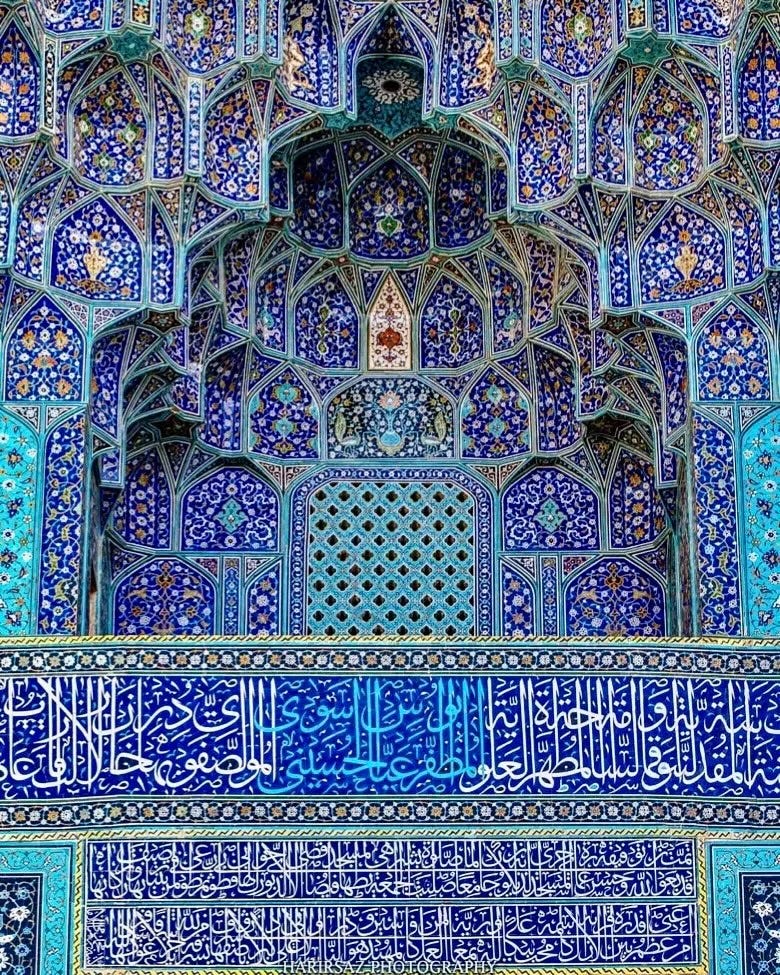
Iran, today, however, is not iconophobic at all. It is icono-obsessed: great, big images loom down upon every public space in a way that would make Nebuchadnezzar himself grimace; and its icons are not beautiful. They are not even ambitious enough to be hideous. They are just shit.

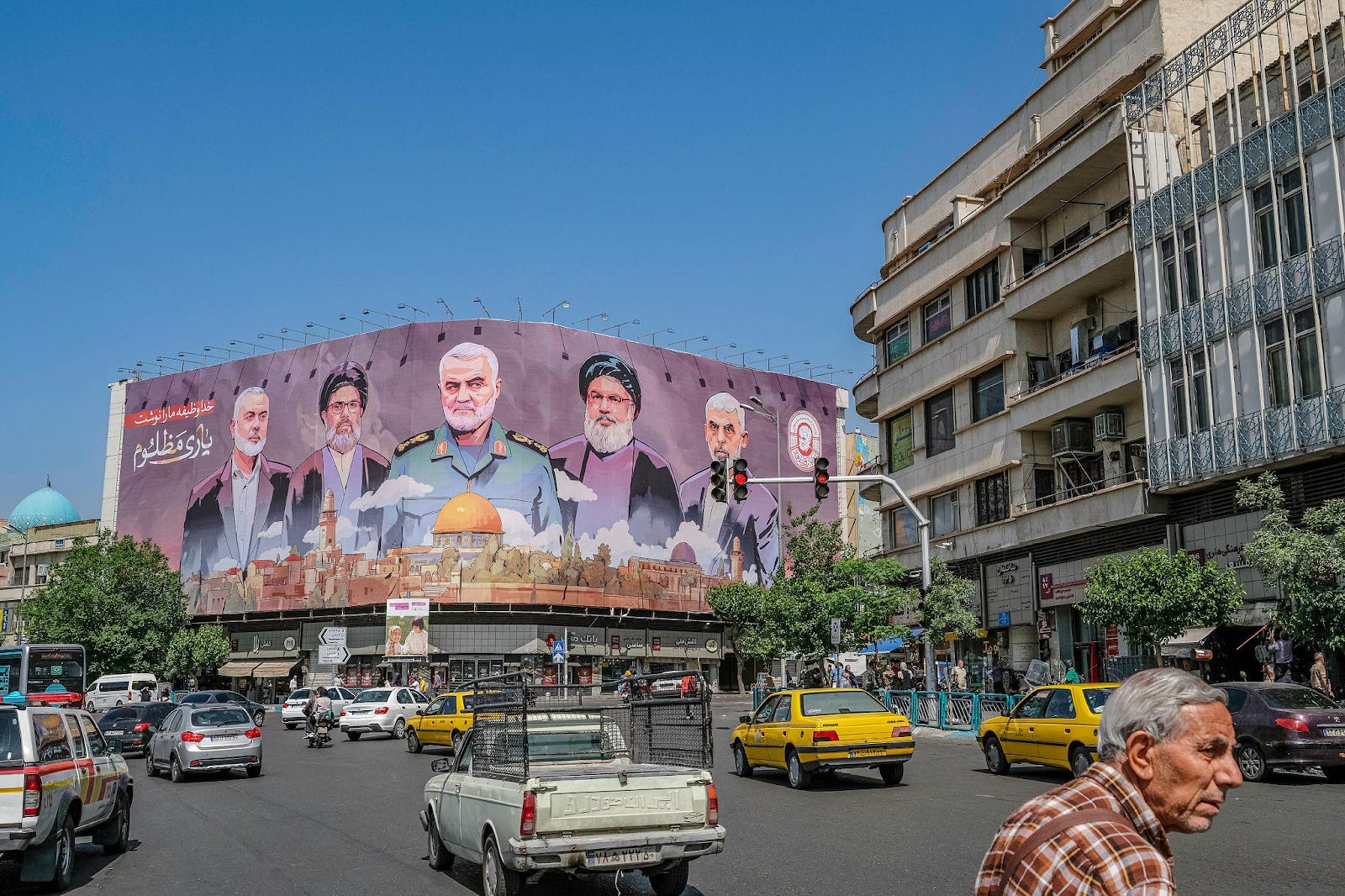
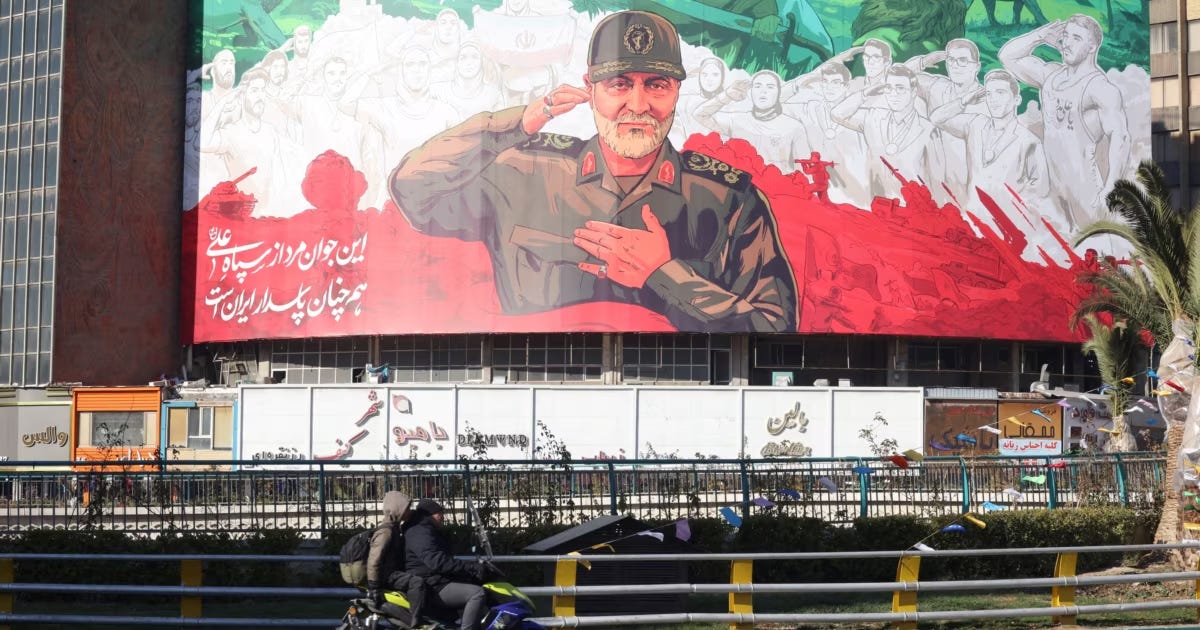
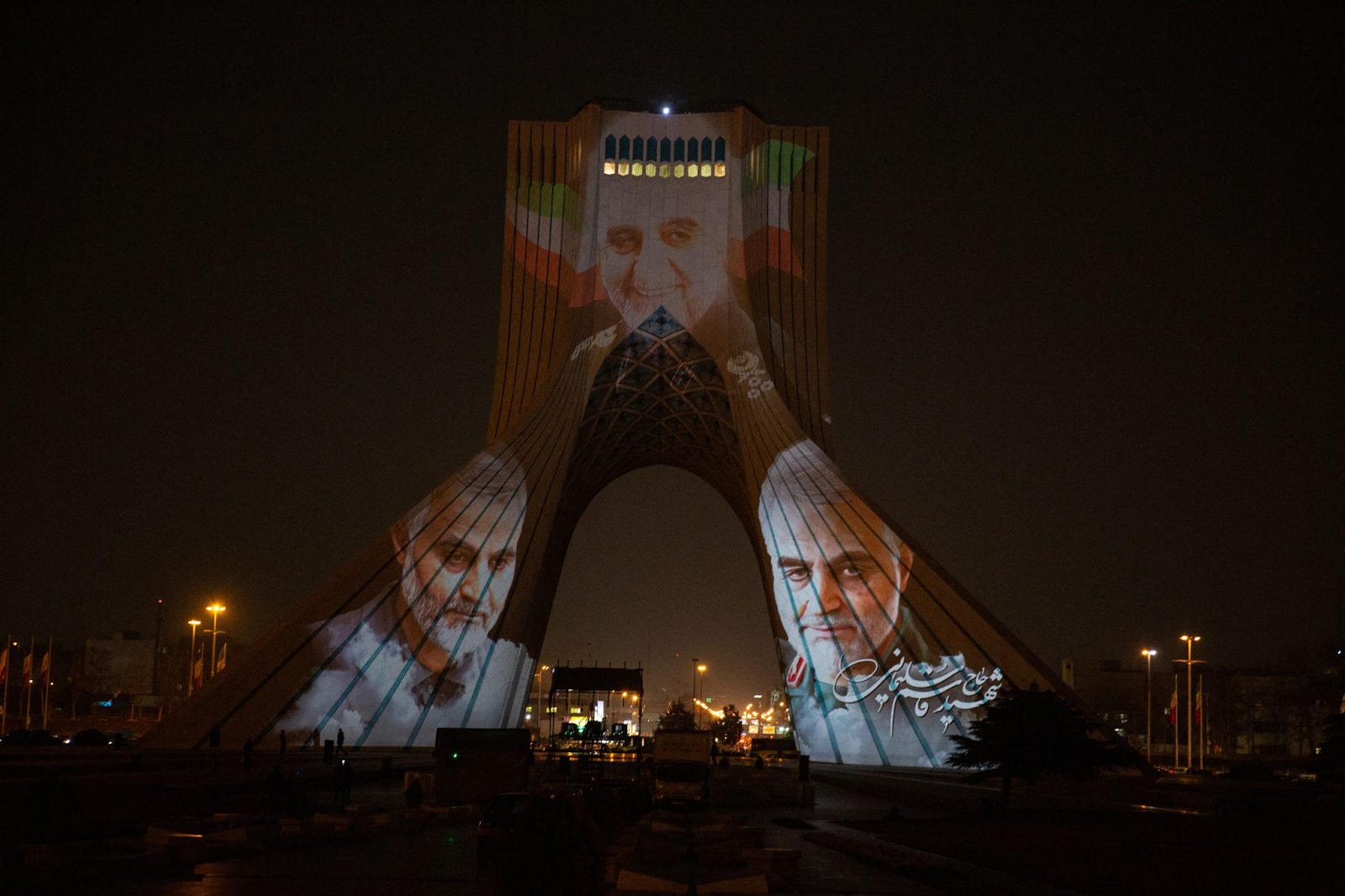

So what’s up? How did the Islamic republic become the world’s foremost exponent of political idolatry? Well, it’s a long story and it starts with me binging on Wikipedia. The proverbial immigrant doing the dirty jobs so you don’t have to.
The Party of Ali
The fourth caliph of the Muslims was Ali Ibn Ali Talib, Mohammed’s cousin and, Arabic marital norms being what they are, also his son in law. After his death, there was a dispute about who should succeed. A minority insisted it should be Ali’s son, Hasan, on the principle of hereditary succession. The majority party favoured some other relative of Muhammad called Mu’awiya ibn Abi Sufyan, and after a bit of war Hasan more or less accepted their verdict for all practical purposes and chilled out in Medinah. However, Mu’awiya decided to install his son as successor, turning his Umayyad clan into a dynasty, in essence adopting the hereditary principle upon the negation of which his legitimacy rested. With Hasan now dead, his younger brother Husayn, made a bid for power, ending in his death at the Battle of Karbala in 680. Politically speaking, that was the end of the party of Ali for the time being, but a certain proportion of the Alids refused to accept that the verdict of history and the verdict of Allah were the same. While the Umayyads, and then the Abbasids had earned the right to temporal rule, religious authority lay solely with the descendants of Ali, the Imams, alone able and worthy to authoritatively interpret the Koran to whom in due course earthly rule would return.
Of course, in practice, hereditary descent is always a tricky matter. There was a split over who was the correct Imam at number 5, with the splitters eventually becoming terrorists in Yemen, and another one at number 6, which, in due course, begat the Fatimid Caliphate in North Africa. The groups that ‘split off’ at these points were arguably more important in their own era, but we are concerned here with the ‘Twelvers’ about whom people now use the term ‘Shi’ite’ without qualification. ‘Twelver’ is, however, something of a misnomer, because they only got to eleven. Hasan Al-Askari was born under house arrest in the city of Samarra where he lived until his death at age 28 in the year 874, quite probably having been assassinated by the Abbasid regime. Because of his young age, he had not fathered or appointed an heir. As many as 20 different sects emerged as a response to this crisis, but the one we know of now as the ‘Twelvers’ had the most ingenious solution.
According to the Twelvers, Hasan had had a son called Mohammed and designated him as the next Imam. The fact that no-one had ever seen this son was explained by the hypothesis that he could not be seen. The term used for this is ‘occulted’, but that isn’t taken to mean he went to heaven or space. Rather he was on earth, but no-one could communicate with him except his representatives. Shi’ites were used to this on a logistical level because the last two Imams had been confined to house arrest and communicated through trusted emissaries. The retreat of ‘Muhammad’ to somewhere where only four people could talk to him was the ‘minor occultation’, followed by the ‘major occultation’ in the year 941 when he could no longer communicate even through representatives (because the original ventriloquists died without being able to initiate new members in on the joke.) This 12th Imam is somewhere on earth ruling over the ummah in a spiritual fashion, and will reveal himself at the end of days.
To sum up core Twelver doctrine:
The indispensable constituent part of the Muslim community is the Imam, a perfect and sinless man and living descendant of Muhammad via the line of Ali, who alone can interpret the Koran, and has received the secret doctrines that give it meaning.
The Imam is invisible.
Without the actual guiding hand of an Imam in a more prosaic sense, the Twelvers were forced to develop a canon of Koranic interpretation and law, based on hadith collections, precedent, and logic, just like the Sunnis. By any reasonable standard, this was tantamount to a confession that the Sunnis had been right all along, but, as we shall see, reasonable standards do not unduly trouble the Shi’ites.
One might wonder why the ruling Sunni caliphs did not simply suppress this movement out of existence. During the early stages, they were restrained by the great respect all descendants of Mohammad, and especially those of Ali, had within the broader Muslim community, and, in fact, did repress them as much as they thought they could get away with. After the double-disappearance of the last Imam, the Twelvers saved themselves through a doctrine of strict political quietism. Since the authentic leader of the ummah was unfortunately deaf, dumb and invisible, there was no question of installing him as caliph in a practical sense, so a good Twelver would obey the public law, keep the peace, and practice his religion, where it differed from the established one, in private. Given the large number of very-much-not quietist political movements, some of them Shi’ite and some of them other weird stuff, which would occasionally even succeed in setting up rival caliphates, the Abbasids looked at Twelvers as benign by comparison. Twelver Shi’ites themselves practiced careful deception (taqiyya) about their own religious beliefs, designed to avoid getting fatwahed like the Alawites or Druze. Normative Sunni jurisprudence is actually surprisingly tolerant in certain respects and let them get away with it. Finally, the Abbasid empire gradually became substantially dysfunctional and contained multiple de facto independent polities under the theoretical rule of the caliph, one of which - the Buyid state in Iran - actively promoted Shi’ism.
This was the situation until the 16th century. The Safavids, originally a Sufi order, who had adopted a more radical version of Shi’ism as part of their conversion into a militia, and after many centuries of fighting from the mountains, took over Iran. The first Safavid Shah, Ismail I, was not properly a Twelver, he considered himself to be an Imam, and also an incarnation of God himself. However, he invited Shia scholars from the established schools in Lebanon and Iraq to staff his religious revolution because his own version of Shi’ism didn’t really have any. Unsurprisingly, after 800 years posing as harmless and pleading, mostly successfully, for their toleration, the newly empowered Shi’ite clergy set about ruthlessly persecuting the Sunni population of Iran, which is why there practically aren’t any today outside of the wastelands and mountains of the periphery. When there were no Sunnis left to persecute, they moved onto other groups, principally Jews, Christians being more problematic because of the close relationship Iran had developed with Russia by that point.
I have a secret
I briefly alluded above to the Shi’ite belief that, in addition to believing that a living Imam is necessary to authoritatively teach Islamic law and resolve disputes, he possessed esoteric doctrines not taught, or perhaps alluded to, in the Koran itself. Students of Jewish mysticism will be familiar with many of these, such as the idea of four levels of scriptural interpretation or the 72-letter name of God which allows those who know it to perform miracles. However, the core of this doctrine is the core of all esoteric doctrine, namely that conventional monotheism is too boring, too simplistic, too stale, and there’s a much more complicated and profound version of monotheism that sounds a lot, to the untrained ear, like not-monotheism, but is definitely monotheism, trust me bro.
Closely tied to this more sophisticated theosophy were doctrines about the Imams themselves. I have already mentioned that Shi’ite doctrine holds them to be free of all sin and error, but that is the moderate version. More extreme versions of Shi’ism, known as ghulat (exaggerators) believed that the Imams were basically God. These more extreme versions were suppressed with some vigour by the Abbasids and the Twelvers we know and love are the more Sunni-like quasi orthodox ones, at least that’s what they say. Another typical aspect of mysticism is that it leads to greater tolerance of popular religious practices, which can be favourably interpreted in the light of their secret doctrine. Mainstream Islam frowns very strongly on praying at graves, but Shi’ites figured out that since God is kind of everywhere, maybe he is especially present at the graves of the righteous. They are thus widely known as ‘grave worshippers’ because they, in fact, worship graves. For an example of Shi’ite religiosity that adapts esoteric doctrines to the level the ordinary man can get on board with, google search ‘Shi’ite Koran on head’ (go on, do it).
However, the taboo on use of images in Islam is so deeply rooted that this was too far even for Shi’ites, until the 19th century. The ruling Qajar dynasty took advantage of developments in print technology to try and get a personality cult thing going, adapting Russian artistic styles.
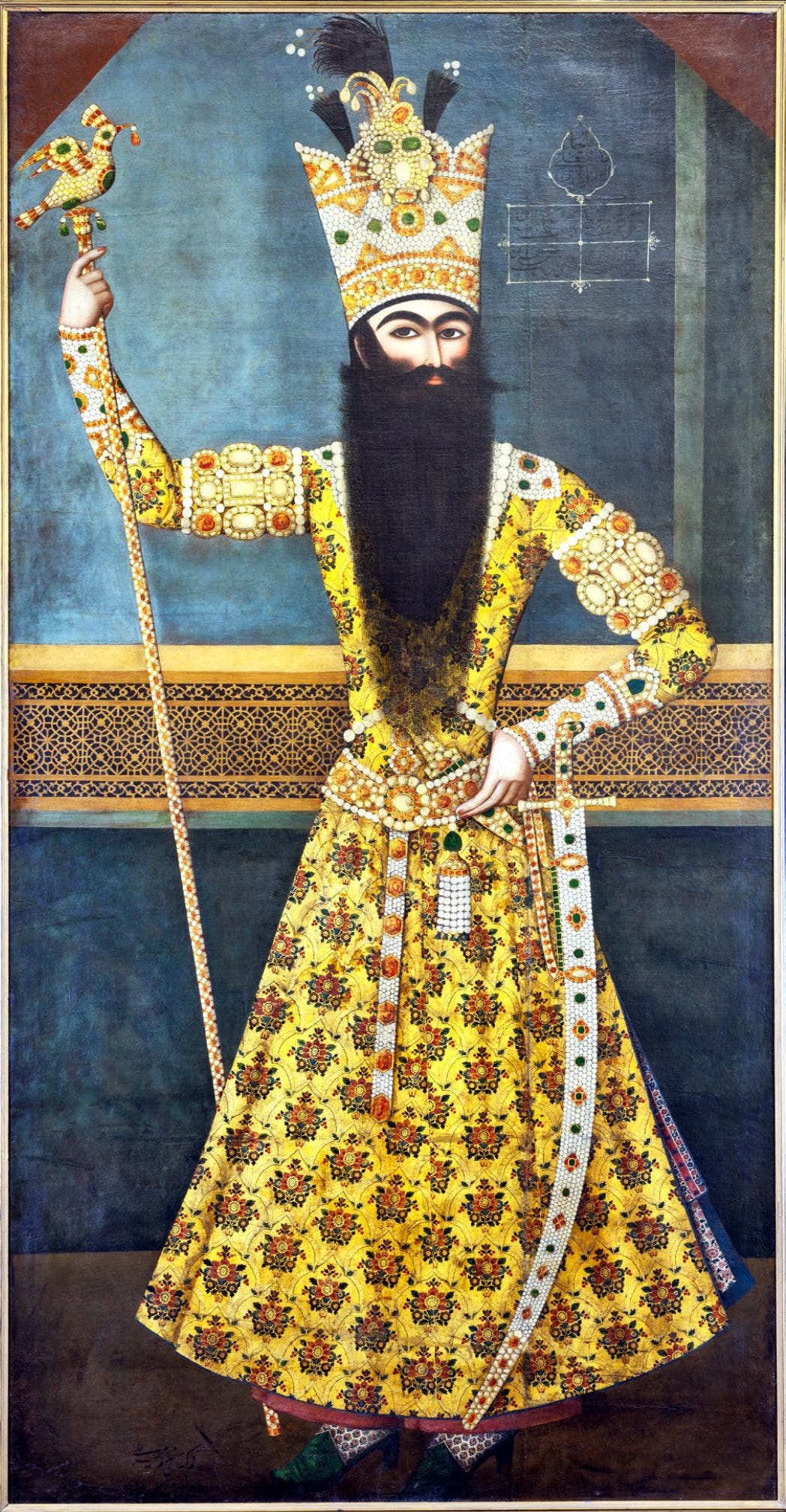
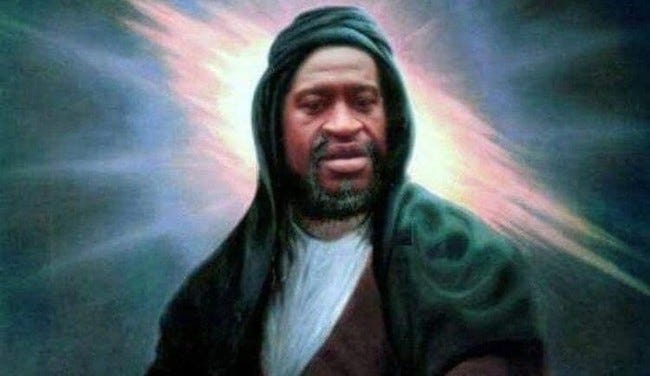
It didn’t go especially well, but it did generate a copycat industry producing images with greater popular appeal, namely of Shia saints, and in particular the Imams. These images were based on Christian devotional models, which was unfortunate since the 19th century was the time when Christian art had hit rock bottom and pulled out the heavy drilling equipment. Hence the new Shi’ite iconography ended up looking like this:
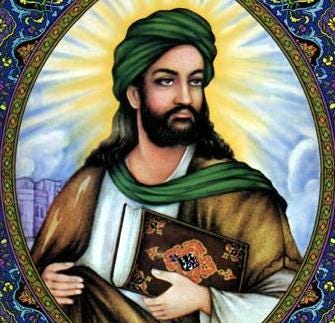

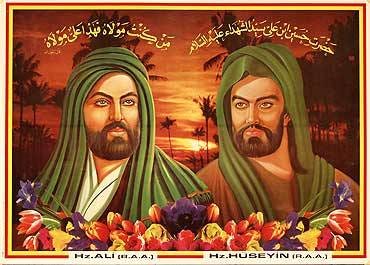
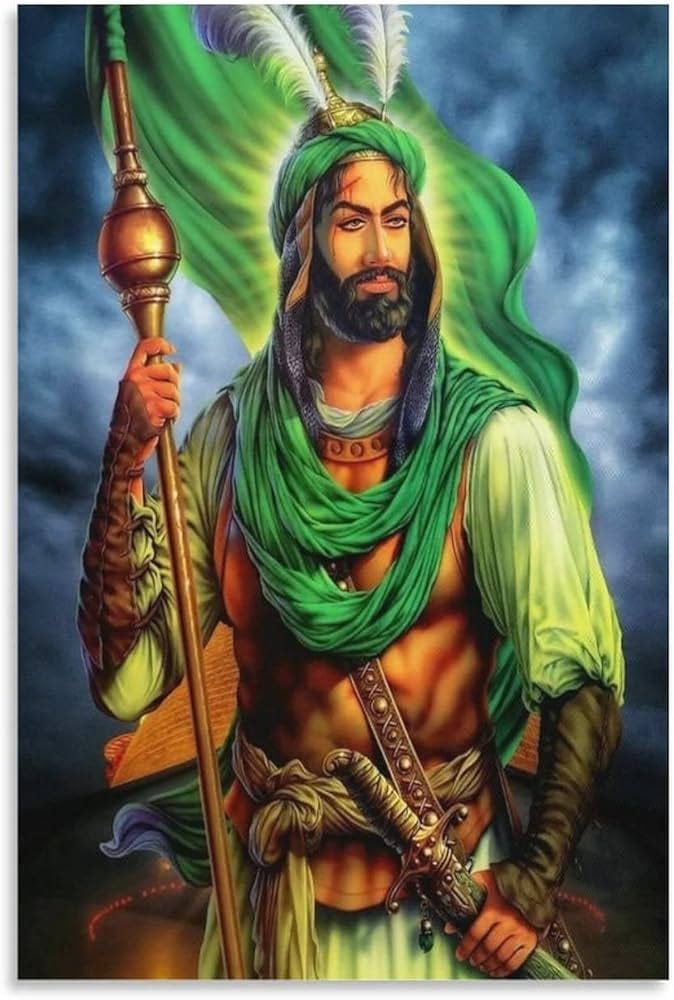
Some irreverents have pointed out that this is all just a teensy bit gay, and Isfahan was once a famous tourist destination for homosexual pederasts.1 Be that as it may, this new devotional culture was originally treated with some suspicion by the Shi’ite clerisy, but they mostly got over it in due course. You know the drill: ‘they’re not really praying to the images, they are being inspired by the images to pray, and not to the person depicted, but to God whose religion they represent, and why are you such a killjoy and always denouncing your fellow Muslims, and blah, blah, blah”. However, it was not until later that clerics became active promoters of iconism for political purposes.
Mordor
The Seminary of Qom was founded in 1924, before which Iranian clerics of distinction had generally been trained in Najaf. The teachers and students of Qom grappled above all with the problem of the cumulative detachment of Iran’s rulers from the enforcement of Shi’ite orthodoxy, which went into overdrive with the ascension of the Pahlavis in 1925. Strictly speaking, the Twelvers had never departed from their doctrine of political quietism prior to the return of the 12th Imam. The rulers of Iran had asked them to help, and who were they to say no? However, the growing liberalism of the regime forced upon them the question: having tasted power, were they now just going to give it up merely because their religion told them to? The answer was no, and because needs must, they groped their way towards the new doctrine of Wilayat al-Faqih, which states that while the 12th Imam is busy being invisible, temporal rule is ‘entrusted’ to the Shi’ite clergy.
This was not, however, the only way in which the seminary of Qom distinguished itself from Najaf. Ruholla Khomeini was an advocate of Irfan, the revamped form of Shi’ite mysticism, with heavy borrowings from Sufism, replete with all sorts of complicated and subtle meditations on the multiplicity of divine unity, and the quasi divinity of the ‘perfect man’. While taking a very letter-of-the-law approach when it came to issues of modesty or dietary laws, he was an ultra-liberal on the use of images, worship of graves, and anything involving popular superstition or apparent violation of monotheism. Whatever remaining taboo on iconism existed was abolished amidst the revelation that not only deceased saints, but also living clerics, generals, terrorists, and gang bosses could also be the subject of devotion in soft focus and neon colours.2
The war
Iran is ruled by a criminal regime. Opponents of the war like imbecile clown Aaron Bastani tend to minimize this in proportion to the intensity of their opposition. This is the wrong way round though. If the Iranian regime were less criminal, it would be more susceptible to changing its policy in response to military action, it would not have wrecked the country sufficiently thoroughly to preclude it being overthrown, it would not consider causing global economic collapse a legitimate tactic of war. But it is a criminal regime, and so it does. If you have a rabid dog outside, it may be doubtful what the correct course of action is in response, but it is certainly not to gather the neighbours in the yard then throw rocks at it.
Islam has a violence problem; no reasonable person would deny that. It does, though, have an excuse. It is the only religion that has ever enforced strict monotheism at an international scale and stuck to it. Iranian Shi’ism, however, thinks it gets to eat its cake and have it. Its contempt for the unbelievers is unlimited; Shi’ite clerics are loathe to allow them even to walk outside in the rain lest they defile the pure. But among the believers themselves, no deviation is too gross or imbecilic to merit restriction. Submission means in some very theoretical sense submission to God, but everyone knows it means submission to his favourites, to whom all is permissible, especially what they really want, namely to kill, and no matter how many they kill, they are the victims of aggression and the ever-growing list of ‘aggressors’ who object to them only proves how victimized they are. Iran is a criminal regime, not because it is ruled by clerics, but because it is ruled by clerics of a criminal religion, at any rate a criminal version of one. Food for thought.
For something really gay, though, check this out:
The exception is Taqi Wazdi, a major psycho and advocate of unlimited clerical power, but also critical in theory of the excesses of Irfan and popular superstition. Think of him as the token Rambamist Kahanist who knows every source telling you to kill Palestinians, and then gets evasive and shifty when you ask what should be done to the guy with the yechi kippa next door.
Ya Ali! Ya Hussein! How disgracefully does this article depict ancient holy practices: https://www.youtube.com/shorts/DuEktwbqRTQ.
How does walking outside in rain defile the pure?